
 Price Guarantee
 Rent Now
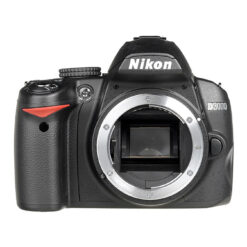
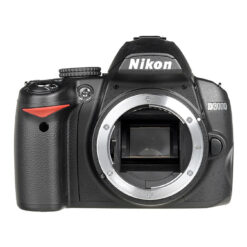
The Nikon D3000 is an entry-level DSLR designed for photographers moving up from point-and-shoot cameras, offering straightforward handling and solid image quality in an accessible, beginner-friendly body. Positioned at the foundation of Nikon’s consumer DSLR lineup at the time of its release, it prioritized simplicity and approachable operation for photographers new to interchangeable-lens cameras.
At the core of the D3000 is a 10.2MP APS-C CCD sensor paired with Nikon’s EXPEED image processor, delivering solid image quality for everyday shooting along with an ISO range suited to typical lighting conditions of its era. Autofocus is handled by an 11-point AF system, providing dependable focus acquisition for general photography, portraits, and everyday snapshots, a respectable array for an entry-level body at the time of release. Continuous shooting reaches approximately 3fps, adequate for casual snapshots but limited for fast-paced action or sports photography.
A notable feature aimed at new photographers is the D3000’s Guide Mode, offering simplified, plain-language explanations of camera settings and functions directly through the menu system, helping beginners understand exposure concepts without needing outside instruction. The camera features a fixed 3.0-inch rear LCD for image review and menu navigation, along with an optical viewfinder for traditional composing, though the D3000 notably lacks Live View shooting, a feature that would become standard in Nikon’s subsequent entry-level DSLR generations.
Build quality reflects the D3000’s entry-level, lightweight positioning, with a compact body designed for comfortable, all-day handheld use. As an earlier-generation entry-level DSLR, the D3000 does not offer video recording capability, a feature that would become standard in later Nikon DSLR models.
The D3000 uses Nikon’s F-mount lens system, giving it access to Nikon’s extensive range of FX and DX-format lenses developed across decades, though photographers should note that older Nikon lenses without an internal autofocus motor will require manual focus on this body, since the D3000 lacks an in-camera focus motor. Connectivity options are limited by modern standards, reflecting the camera’s release in an earlier era of digital photography before built-in wireless features became common.
Key Features
– 10.2MP APS-C CCD sensor with EXPEED processor
– 11-point autofocus system
– Approximately 3fps continuous shooting
– Guide Mode for beginner-friendly operation
– Fixed 3.0-inch rear LCD
– Optical viewfinder (no Live View)
– No video recording capability
– Nikon F-mount lens compatibility (requires lens with internal AF motor for autofocus)