 Price Guarantee
 Rent Now
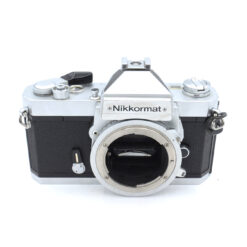
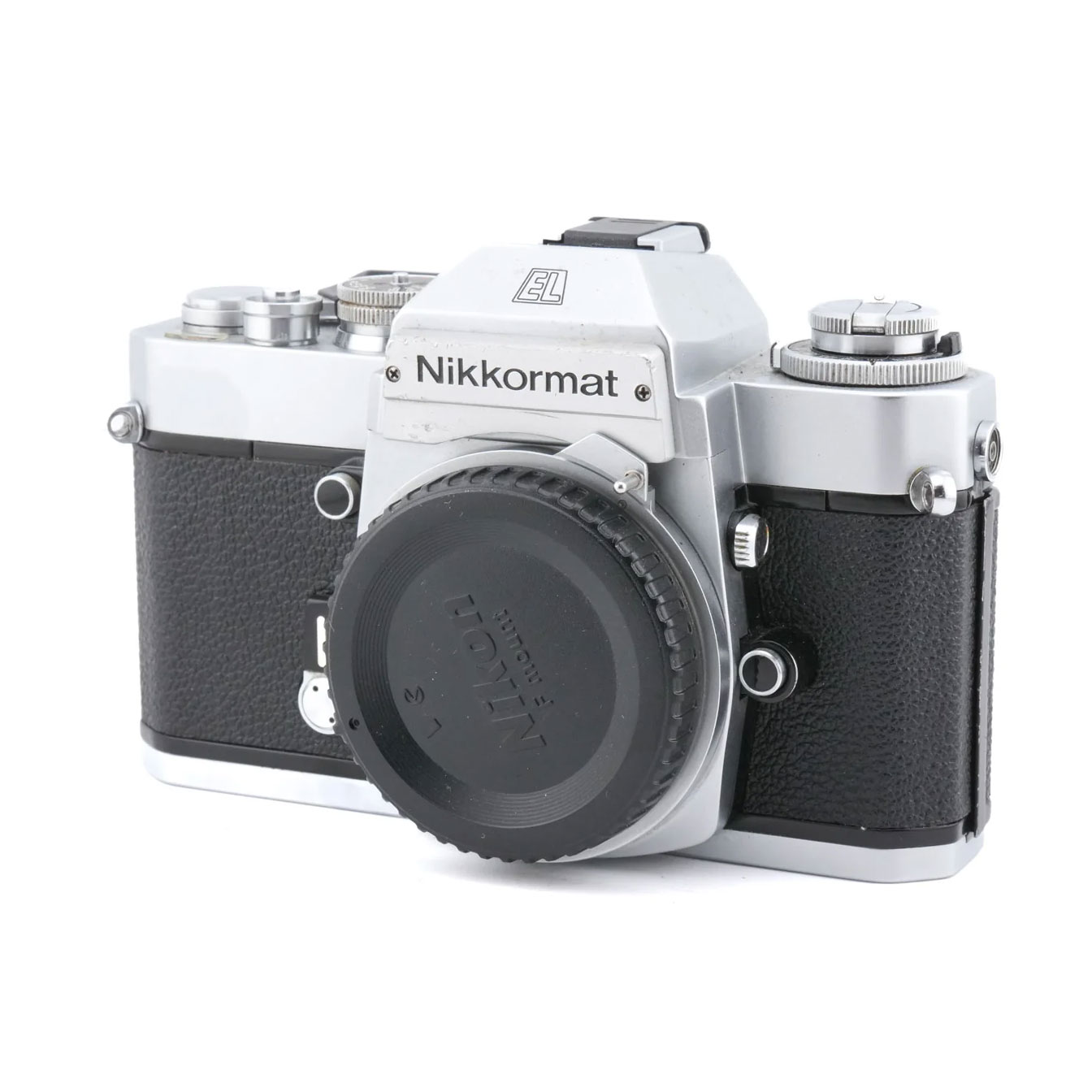
The Nikon Nikkormat EL is a 35mm film SLR introduced in 1972, marking Nikon’s first attempt at a camera with an electronically controlled shutter and aperture-priority automatic exposure, a genuine landmark in the company’s camera design even though it predates the more commercially successful Nikon FE and F3 that followed similar principles.
At its core, the EL features an electronically timed vertical metal focal-plane shutter ranging from 4 seconds to 1/1000 second plus Bulb, with electronic flash sync up to 1/125 second via a conventional hot shoe. The camera’s TTL center-weighted CdS light meter covers an EV range of 1 to 18 at ASA 100, with selectable film speeds from ISO 25 to 1600, and enables aperture-priority auto exposure, a first for Nikon, alongside full manual exposure control. The viewfinder uses a bright, easy-to-read match-needle display for the aperture-priority system, with a focusing screen featuring a central split-image rangefinder ringed by a microprism.
As a pre-AI body, the EL requires Nikkor lenses to be manually indexed to the camera using Nikon’s “twist-twist” procedure (setting the lens aperture to f/5.6, mounting the lens, then twisting it to its smallest and widest apertures) so the camera can properly read the lens’s maximum aperture; the lens meter coupling type uses Nikon’s traditional prong (“bunny ears”) system, with an aperture coupling range of f/1.2 to f/5.6. AI and AI-S lenses can still be mounted and used, though not with full metering compatibility.
Handling includes depth-of-field preview, mirror lock-up, and a self-timer, along with a shutter speed dial positioned conveniently atop the camera next to the film advance lever, moving the EL closer to the classic 1970s SLR control layout. Power comes from a single 6-volt PX28/4LR44-type battery, housed in a compartment underneath the mirror, with the shutter and metering circuits disabled to conserve battery power until the film advance lever is pulled outward.
Build quality centers on a die-cast aluminum body with brass top and base plates, giving the EL a notably large, heavy, and durable feel compared to its contemporaries, weighing approximately 780-784g and measuring approximately 145 x 94 x 55mm. The camera uses Nikon’s F-mount lens system, and was produced in both black and silver (chrome) finishes.
Key Features
– Nikon F-mount pre-AI 35mm film SLR (1972-1976)
– Electronically timed vertical metal focal-plane shutter, 4 sec to 1/1000 sec plus Bulb
– Aperture-priority auto exposure and full manual exposure modes
– TTL center-weighted CdS light meter (EV 1-18 at ASA 100)
– ISO film speed range of 25-1600
– Electronic flash sync up to 1/125 sec; conventional hot shoe
– Match-needle viewfinder display
– Split-image rangefinder with microprism focusing screen
– Prong (“bunny ears”) lens meter coupling; requires manual lens indexing
– Depth-of-field preview, mirror lock-up, and self-timer
– Top-mounted shutter speed dial
– Powered by a single 6V PX28/4LR44-type battery
– Battery-conserving shutter/meter lockout until film advance lever is pulled
– Die-cast aluminum body with brass top and base plates
– Approximate weight: 780-784g
– Available in black and silver (chrome) finishes