
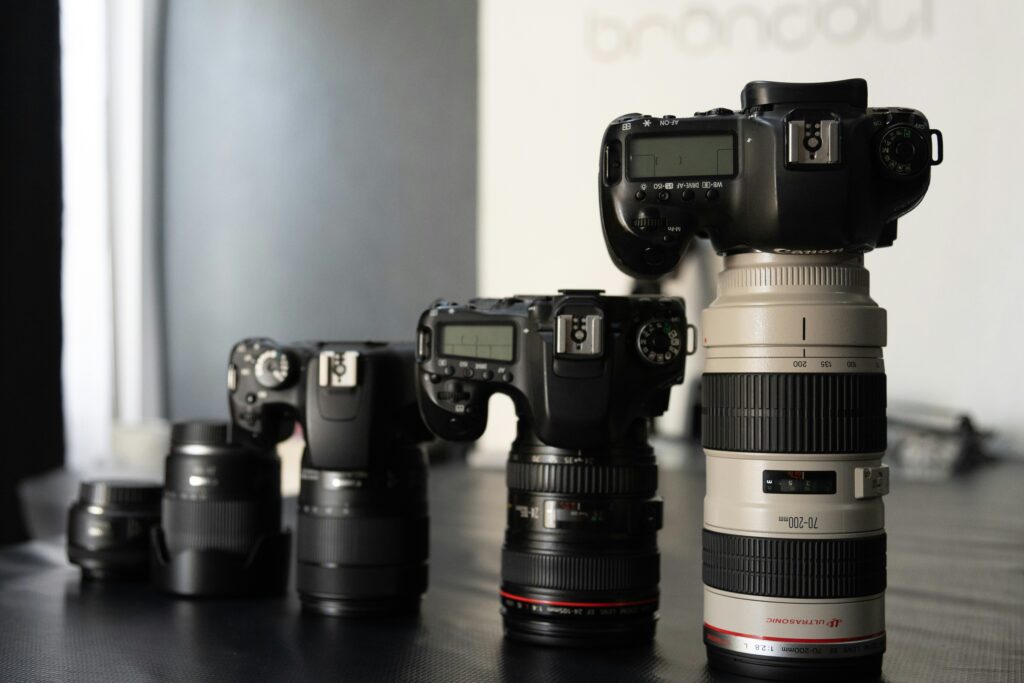
We buy and sell used gear all day, which means we have a strong opinion about where used is the smartest money in photography and where it is a genuinely bad idea. Those two lists are not close to each other, and the line between them is not about price.
Here is the rule that sorts almost everything:
Buy used when the thing is mechanical or optical and you can inspect it. Buy new when the thing is chemistry or electronics with a consumption cycle you cannot see.
A lens wears out visibly. You can look through it, work the rings, check the contacts. A memory card wears out invisibly — there is nothing on the outside that tells you how much life is left, and the failure mode is losing your photographs rather than taking a slightly worse one.
That distinction does most of the work. Here is how it plays out category by category.
Buy used, confidently
Lenses — the best used value in the store
If you take one thing from this post: lenses are the category where used makes the most sense, by a wide margin.
Optical design moves slowly. A well-made lens from ten years ago is optically the same lens it was when new — the glass has not changed shape, the coatings have not worn off in normal use. Autofocus motors and stabilization have improved, and if those matter to you, buy newer. But sharpness, rendering and build quality do not decay sitting in a bag.
Lenses also fail visibly, which is the key point. The things that actually go wrong — fungus, haze, internal dust, separation at a cemented element, a sticky aperture, loose elements — are all findable in a few minutes by someone who knows what to look for. That is a genuinely different situation from gear whose condition is invisible.
And the money is substantial. The same budget buys a noticeably better lens used, and lenses hold their value, so if it is not right you have not lost much getting back out.
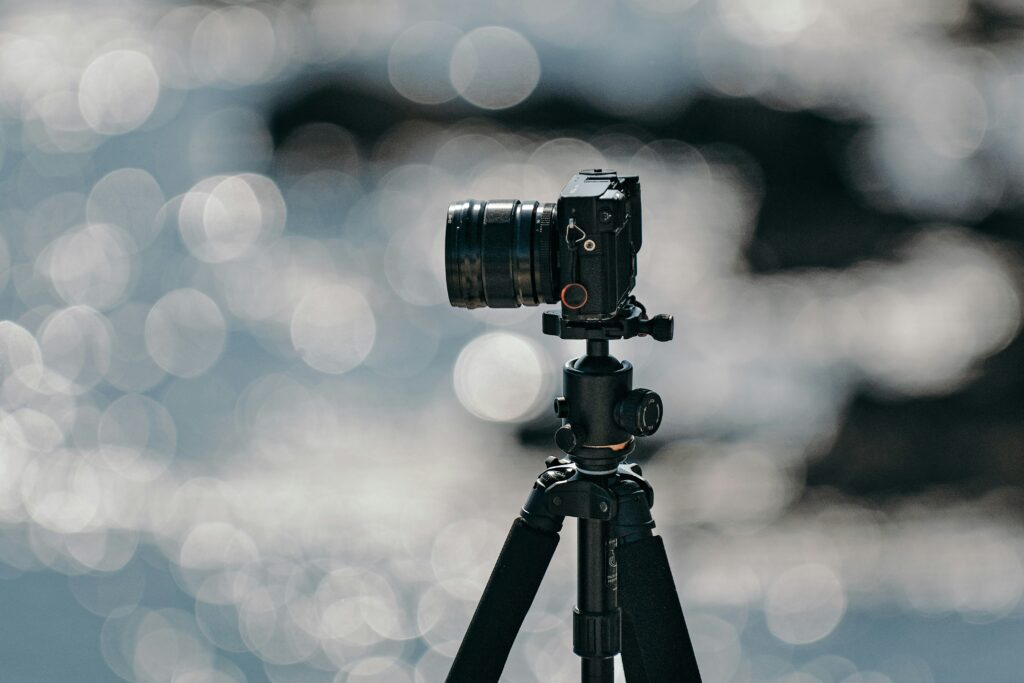
Tripods and support
Close to risk-free. A carbon fiber or aluminum tripod is legs, locks and a head. Everything that can go wrong is visible and most of it is fixable — worn leg locks and tired rubber feet are replaceable parts, not reasons to pass. Carbon fiber in particular does not fatigue the way people assume.
Check that the leg locks hold under load and that the head does not creep when you tighten it and let go. That is the whole inspection.

Bags and cases
There is nothing to fail. Check zippers and stitching, look at the shoulder pad, and you are done. Good bags outlive several cameras.
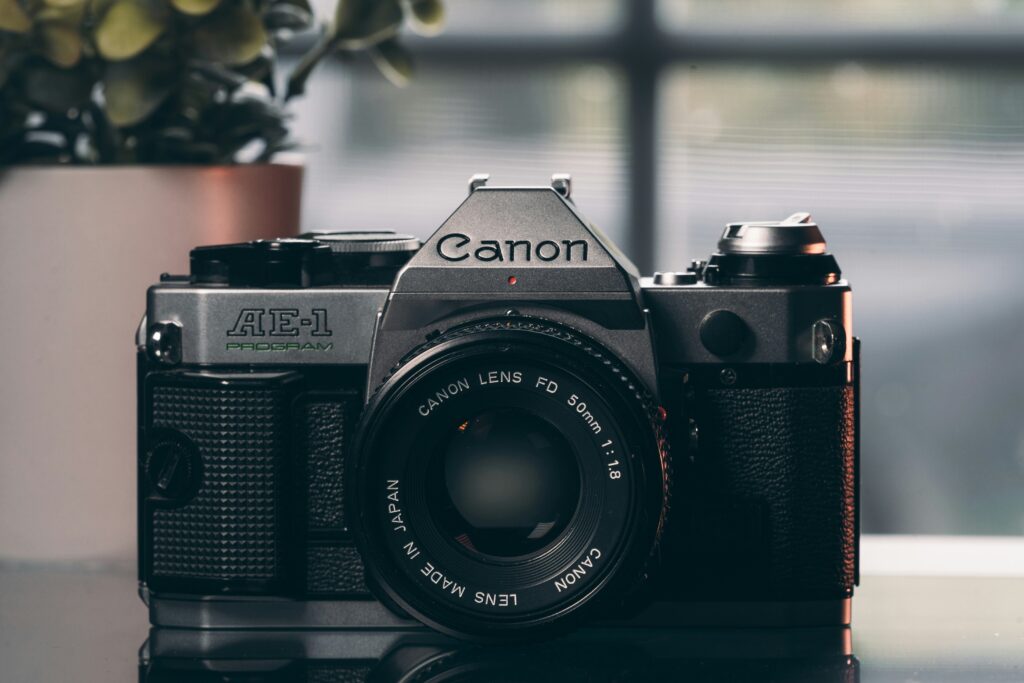
Film cameras and film gear
Largely a used-only market anyway, and the good mechanical bodies were built to be serviced. Here the relevant questions are different — light seals, whether the meter works, shutter accuracy at slow speeds — and a used film camera that has been tested is a far better bet than one that has not.
Filters, teleconverters and extension tubes
Simple optics with little to go wrong. Hold a filter at an angle under a light and look for scratches and coating damage; those are the failure modes and both are visible. Teleconverters and extension tubes are mostly glass and contacts.
Buy new, always
Two categories, and we are unusually firm about both.
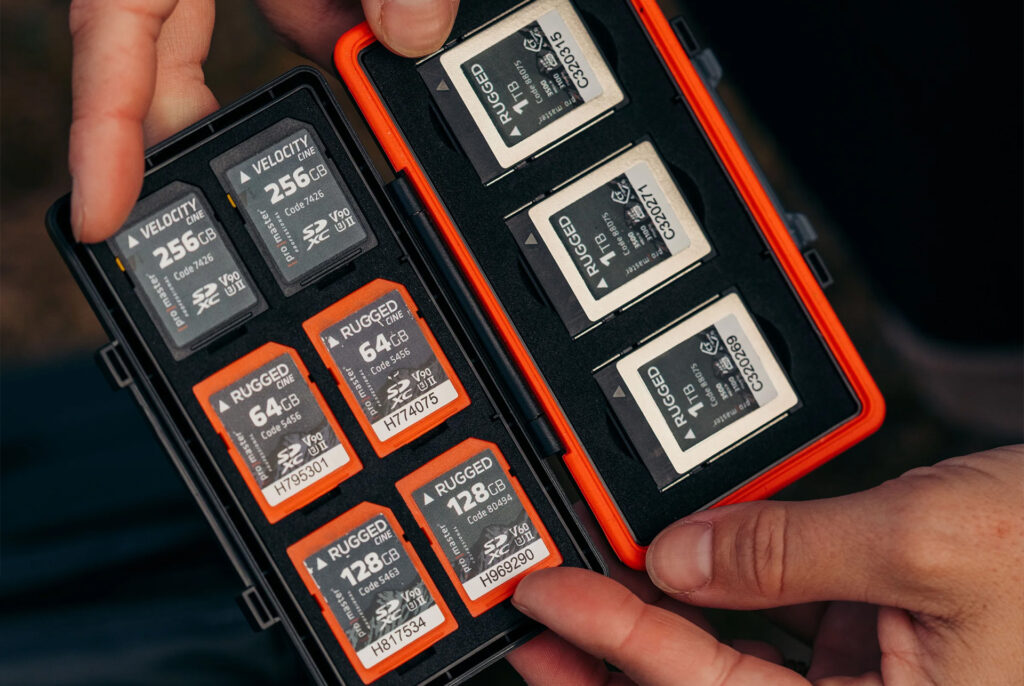
Memory cards
Never buy a used memory card. This is the clearest “no” in the entire post.
The flash memory inside a card wears out, and it wears out invisibly. Each cell can only be written and erased a finite number of times before it becomes unreliable — the published research on NAND flash puts modern consumer-grade cells in the low thousands of program/erase cycles, and in some cases around a thousand. JEDEC, the standards body that defines flash endurance testing, is explicit that endurance depends heavily on the workload a device has actually seen.
Which is precisely the problem. You have no way to know what workload a used card has seen. A card that shot one wedding is physically indistinguishable from one that logged four years of timelapses.
There is a second failure mode that has nothing to do with wear: programmed flash cells leak charge over time, so data retention itself degrades as a cell ages. And a third problem that is not technical at all — counterfeit cards are common in the secondhand market, and a fake card will report a capacity it does not have and fail when you fill it.
Set all of that against the savings, which are a few dollars, and the stakes, which are every photograph from a day you cannot repeat. Buy the card new. This is not us upselling you; it is the single cheapest insurance in photography.
Batteries
Lithium-ion degrades on two separate clocks: cycles and calendar time. A battery loses capacity as it is charged and discharged, and it also loses capacity simply by existing, with the rate depending on temperature and the state of charge it was stored at. This is why battery-lifespan models used by national research labs account for calendar aging and cycle aging as distinct effects.
So a used battery is not “a battery with some life left.” It is a battery with an unknown amount of life left, where even an honest seller cannot tell you the answer. Nothing visible on the outside correlates with what is left inside.
Add the counterfeit problem — third-party batteries of unknown origin are the single most common source of “my camera randomly shuts off” — and the case closes. Batteries are cheap relative to what they power. Buy them new, buy the manufacturer’s own or a reputable brand, and carry two.
The interesting middle
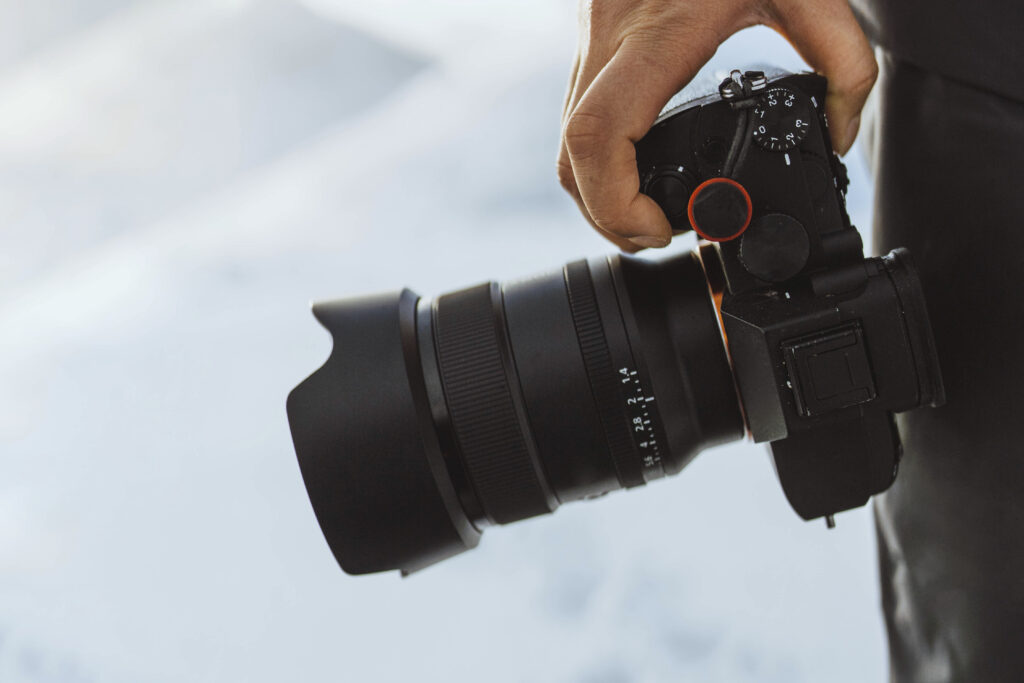
Camera bodies — the best value, with the most to check
Bodies depreciate harder than anything else in photography, which makes used bodies the single best value in the store if you buy the right one. A two-generation-old professional body routinely outperforms a current entry-level one for the same money.
The traditional thing to check is shutter count, and this is where the advice has genuinely changed.
First, the numbers people quote are mostly not manufacturer figures. We went looking at the official specification pages for current and recent bodies from Canon, Nikon and Sony, and none of them publish a shutter durability rating. The widely repeated cycle counts you see quoted in forums are not coming from the manufacturers’ own spec sheets. OM System is the exception and actually publishes the figure — the OM-1 Mark II lists durability at 400,000 shots, the OM-3 at 100,000 — which is unusually transparent and worth knowing if you shoot that system.
Second, and more importantly, shutter count matters less than it used to, because on a modern mirrorless camera a great deal of shooting does not actuate a mechanical shutter at all. Current bodies from Canon, Sony and OM System all offer fully electronic shutter modes. And Nikon took it further: the Z 9 has no mechanical shutter whatsoever. Nikon says so plainly in their own materials — the camera eliminates the need for one, and with it, in their words, any concerns about shutter wear.
So the practical approach on a used body:
- If it has a mechanical shutter and the seller can report the count, that is still useful information — and we will tell you what we see.
- A high count on a professional body is less alarming than a high count on an entry-level one. They were built to different standards.
- Check the things that are not the shutter: sensor condition (dust is normal and cleanable, scratches are not), the screen and viewfinder, every port and door, the card slots, the grip rubber, and whether every button and dial actually does what it should.
- Ask what generation of sensor and processor you are getting. This is where the real difference between a five-year-old body and a new one lives — not in the shutter.
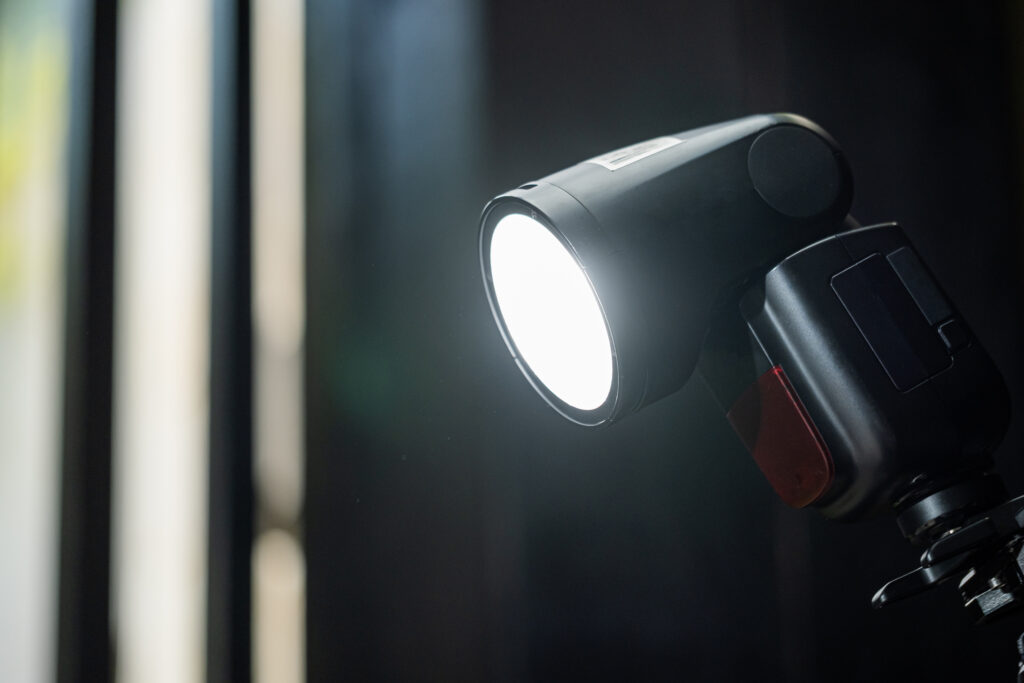
Flashes and strobes
Buy used with your eyes open. The flash tube is a consumable. Manufacturers treat it that way: Godox sells model-specific replacement tubes, and Westcott’s warranty explicitly excludes consumables while listing lamps and tubes as a separate parts category.
Nobody publishes a rated flash count, so anybody who tells you a specific number is guessing. What you can do is look: a tube that has been run hard often shows discoloration or deposits inside the glass, and output can drift. The rest of the unit — the capacitors, the electronics, the mount — ages like any other electronics.
A used strobe from a careful owner is a good buy. A used strobe that spent four years in a rental or a high-volume studio is a different proposition at the same price.
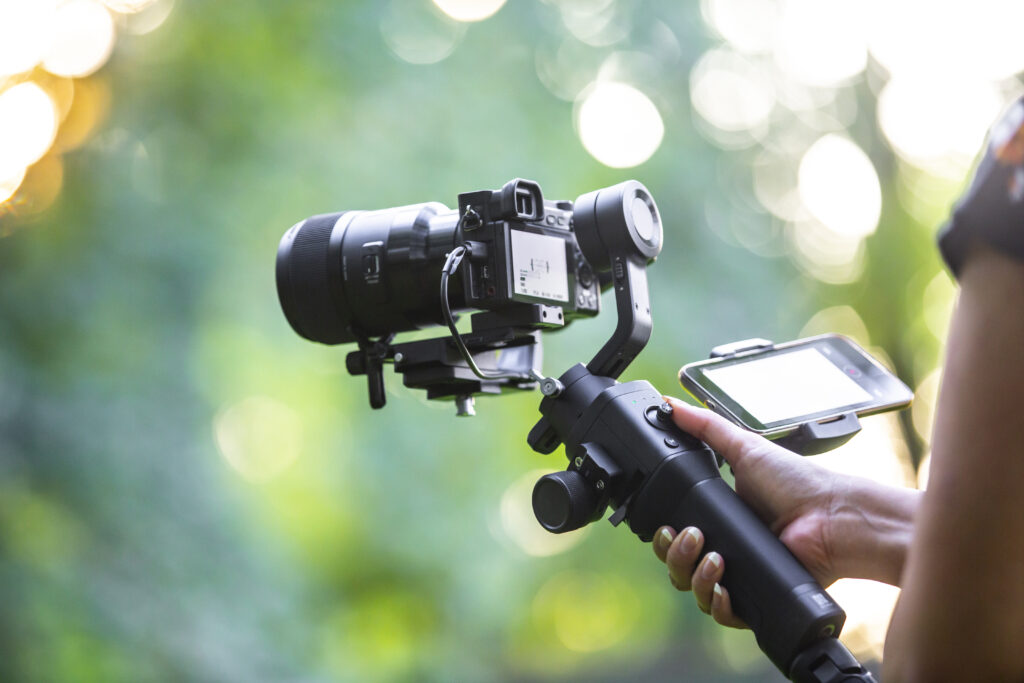
Drones and gimbals
The most cautious category after cards and batteries. Both have motors and bearings that wear, both depend heavily on battery health, and drones specifically may have a crash history you will never learn about. If you buy either used, buy from somewhere that has tested it and stands behind it.
The part that actually makes used safe
Everything above assumes you can find out what you are buying. That is the whole difference between used gear at a store and used gear from a stranger.
Every used item we sell has been inspected, tested, cleaned, tested again, and graded against a written condition scale we publish — so “Good” means a specific thing rather than a hopeful one. And most used items carry a one or two year warranty that is ours. Not a third party’s, not a service contract administered in another state. You bring it back to the counter you bought it at and talk to a person.
That is what converts “used is a gamble” into “used is the smart move.” A private seller gives you a box and a handshake. If the shutter dies in month four, that is entirely your problem.
It is also why, as we said in this year’s gift guide, used moves you up a tier. A $500 used lens is often a $900 lens, and at Christmas nobody knows or cares what you paid.
Come look
Over a thousand used items across cameras, lenses, film gear, video and accessories — and inventory is one-of-one, so the good things do not sit.
San Antonio: 6635 San Pedro Ave · 210-349-4400
Austin: 5907 Burnet Rd · 512-520-5161
Hours: Mon–Fri 10–7 · Sat–Sun 10–6
Bring the camera you own and tell us what you are trying to do. Fifty-three years of looking at other people’s gear, and we will tell you honestly when used is the wrong answer.