“Should I go full frame?”
We get that question more than any other, and it almost always arrives the same way: someone has been shooting a crop-sensor camera for two or three years, they have gotten good, and they have started to suspect the camera is holding them back. Usually they have been reading forums.
Here is the short version of the answer we give across the counter, and it disappoints people a little: full frame is about one and a quarter stops better, and that is the whole thing. It is a real difference. It is not a different league. And for a meaningful number of people asking, a crop sensor is actually the better tool for what they shoot.
Here is the long version.
What the gap actually is
Sensor size differences get discussed as though they were categorical. They are not — they are arithmetic, and you can do the arithmetic.
| Sensor | Dimensions | Area | vs. full frame |
|---|---|---|---|
| Full frame | 36 × 24 mm | 864 mm² | — |
| APS-C (Nikon, Sony, Fujifilm) | 23.5 × 15.6 mm | 367 mm² | 1.24 stops less |
| APS-C (Canon) | 22.3 × 14.9 mm | 332 mm² | 1.38 stops less |
| Micro Four Thirds (OM System, Panasonic) | 17.3 × 13 mm | 225 mm² | 1.94 stops less |
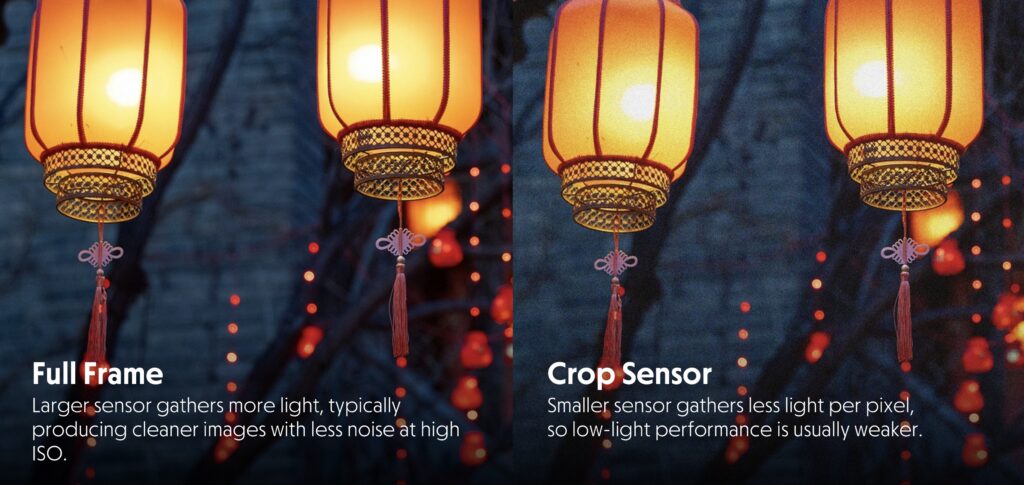
A full-frame sensor collects about 2.4 times as much light as an APS-C sensor at the same settings. That sounds enormous until you convert it to the unit photographers actually think in: one and a quarter stops.
In practical terms, if your crop camera is at ISO 6400 in a dim room, a full-frame body would be at roughly ISO 2700 for a comparable result. That is a genuine, visible improvement. It is also roughly the same improvement you get by putting an f/1.8 prime on the camera you already own.
Hold that thought.
What that stop actually buys you
Low light. This is the real one. If you shoot weddings, events, concerts, churches, or anything else where you routinely live above ISO 3200, full frame gives you cleaner files and more room to recover shadows. For people who earn money in dark rooms, it is worth the money.
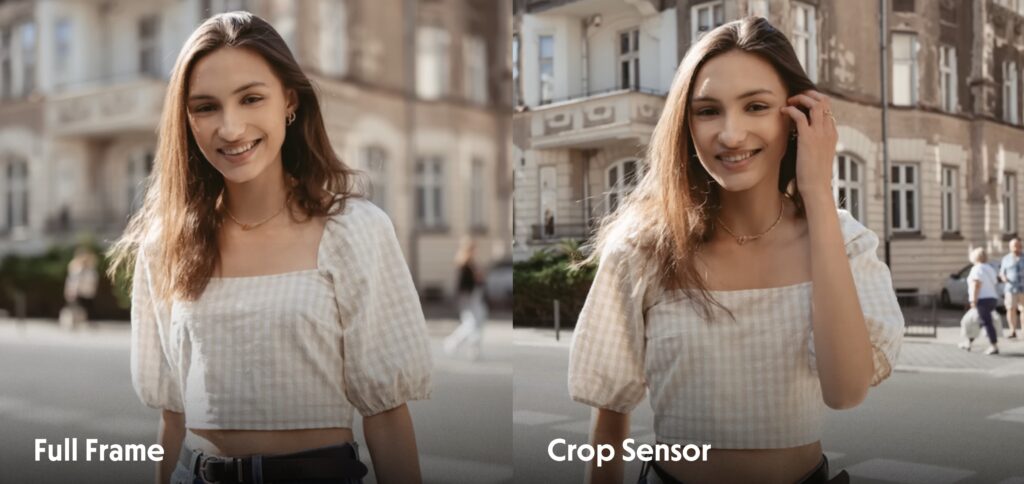
Shallower depth of field at the same framing. To fill the frame the same way, you stand closer or use a longer lens on full frame, and either produces less depth of field. If you shoot portraits and you want that look, this is the aesthetic argument, and it is legitimate.
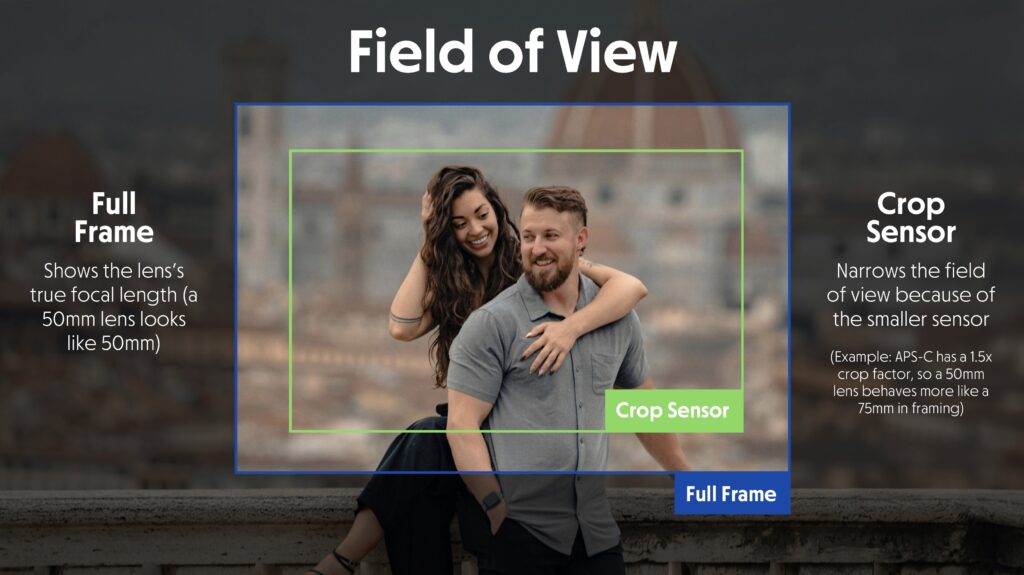
Wider wide angles. A 16mm lens is genuinely 16mm wide on full frame. On a 1.5× crop body it frames like 24mm. Real estate and interior shooters notice this; most other people never do.
What it does not buy you
Sharpness. A modern APS-C sensor out-resolves nearly every lens you can put in front of it. If your photos are soft, the sensor is not why.
Color. Color comes from the processing pipeline and your white balance, not sensor dimensions.
More resolution. Plenty of crop bodies out-pixel plenty of full-frame bodies. These are independent variables.
Better photographs. We have to say it, because the counter conversation usually circles back to it eventually. The four things that actually limit most people’s work are distance, camera height, time of day, and exposure decisions — none of which have anything to do with the sensor.
The part people forget: crop is sometimes an advantage
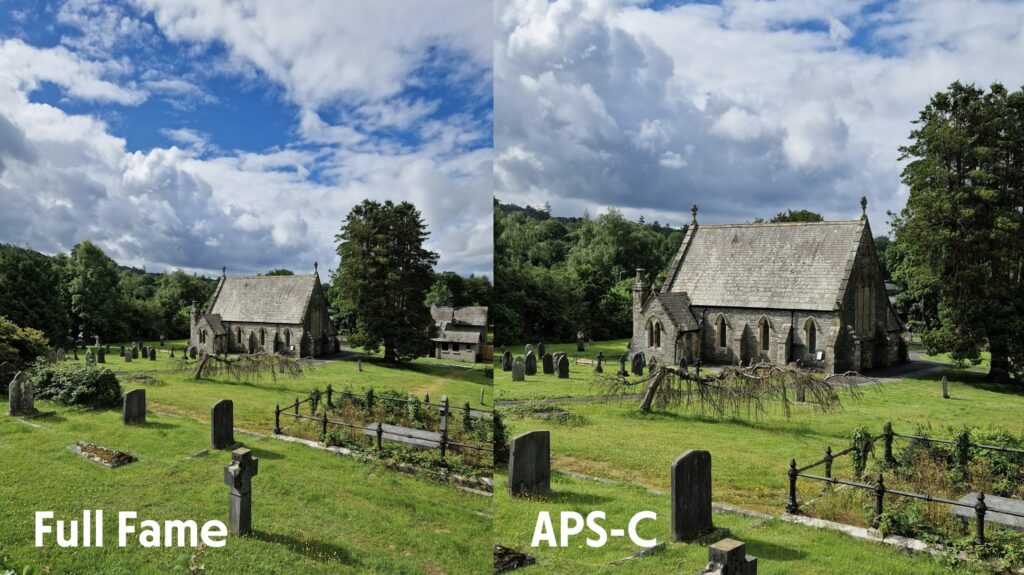
This is the section that surprises people, and it is why we do not give a blanket answer.
A smaller sensor crops into the center of the lens’s image circle, so every lens frames tighter. That is usually described as a limitation. For anyone shooting distant subjects, it is free reach.
To frame like a 600mm lens on full frame, you need:
| Actual lens required | |
|---|---|
| Full frame | 600 mm |
| APS-C (1.5×) | 400 mm |
| APS-C (Canon, 1.6×) | 375 mm |
| Micro Four Thirds | 300 mm |
Look at what that means for your wallet and your shoulder. A 600mm full-frame lens is a serious financial and physical commitment. A 400mm is a fraction of the cost and weight, and on a crop body it frames identically.
If you shoot high school football from the stands — and we wrote a whole guide to that, because it is hard — a crop sensor is genuinely working in your favor. Same for wildlife, birds, motorsport, and anything else where you cannot walk closer.
There is a real trade here: you get the reach but you are back to needing more light. For a Friday night under stadium lights, that trade is a wash and comes down to which lens you can actually afford. For daytime wildlife, the crop body wins outright.
The cost nobody budgets for
The body is the cheap part.
Moving to full frame means your crop-format lenses either do not mount or mount in a cropped mode that throws away the sensor advantage you just paid for. So the real bill is not one camera — it is a camera plus the two or three lenses you actually use, in their full-frame versions, which are physically larger and cost substantially more because they have to cover four times the sensor area.
People budget for the body, buy it, put their old lenses on it, and are disappointed. That is not the camera’s fault. It is a systems purchase.
This is where the honest math usually lands: take the full amount you would spend on a full-frame body plus two replacement lenses, and ask what the single best lens for your existing mount would cost. For most people, that second number is dramatically smaller and improves their photographs more. A fast prime on a crop body outperforms a kit zoom on full frame, comfortably, in every situation where light is the constraint.
Two companies that settled this argument
If smaller sensors were insufficient for serious work, two of the brands in our cases would not exist.
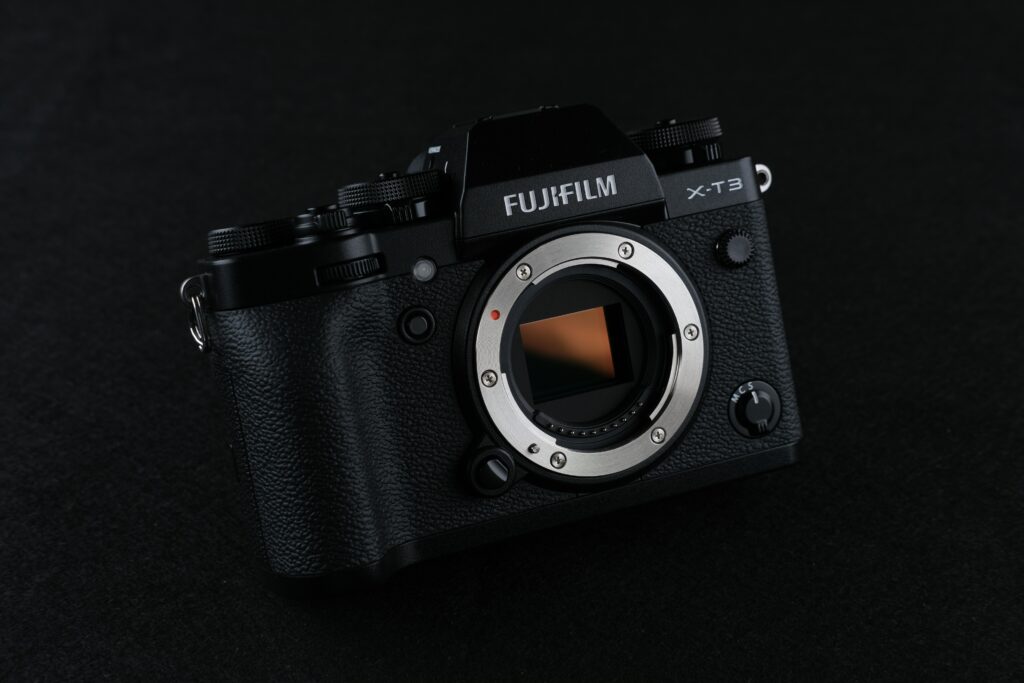
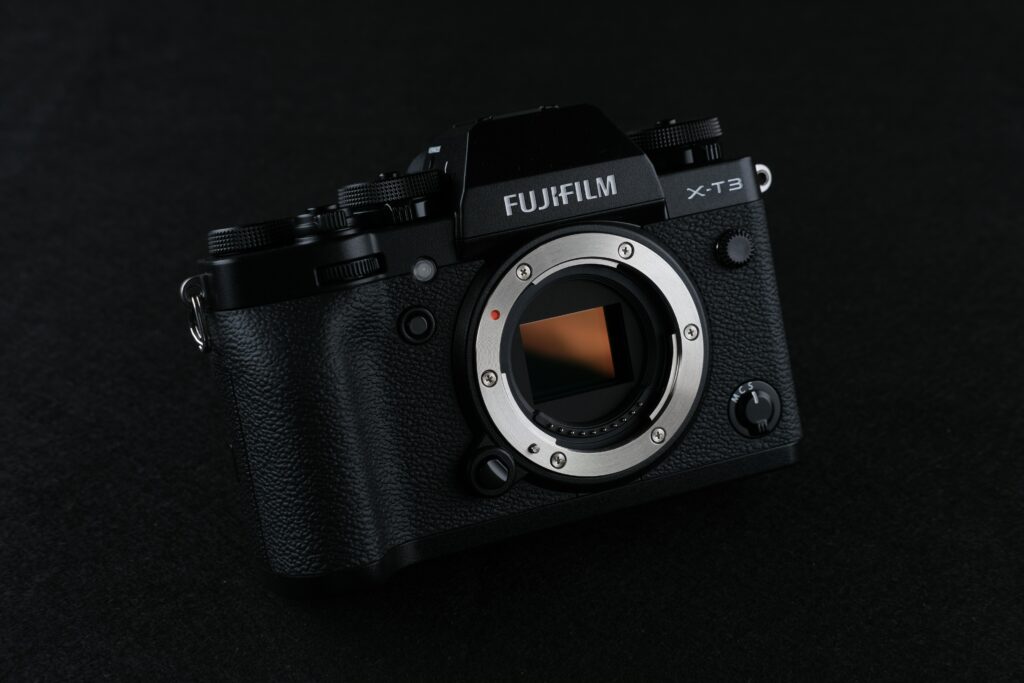
Fujifilm has built an entire professional system on APS-C — bodies, lenses, and a large base of working photographers who chose it deliberately rather than as a compromise. OM System has done the same on Micro Four Thirds, where the size and reach advantages are even more pronounced and the system is a fraction of the weight.
Neither company is confused about physics. They made a trade: give up roughly a stop, get back size, weight, cost, and reach. For a great many photographers that is the correct trade, and the pictures prove it.
So who should actually upgrade?
Upgrade if:
- You routinely shoot above ISO 3200 and the noise is costing you work
- You shoot portraits professionally and want maximum control over depth of field
- You need genuinely wide angles — architecture, interiors, real estate
- You are a working professional and clients expect it
- You have already bought the best lenses for your current system and are still constrained
Stay where you are if:
- You shoot sports, wildlife, or anything distant — the crop is helping you
- You shoot mostly in daylight
- You have not yet bought a fast prime for the camera you own
- The honest answer to “what is limiting my photos?” is technique, not the sensor
- You would be spending the lens budget on the body
The test we use at the counter: look at your last fifty keepers. Were any of them ruined by sensor noise, or by depth of field you could not get? If you cannot find three, the sensor is not your bottleneck.
What to do instead, usually
Spend the money on glass. A fast prime — a 35mm or 50mm f/1.8 — gives you roughly the same low-light gain as moving to full frame, costs a fraction as much, and makes your photographs better in ways the sensor swap will not. We made this point in the Día de los Muertos guide and it holds everywhere: at the same shutter speed, going from f/5.6 to f/1.8 is more than three stops. Full frame is 1.24.
Three stops of lens beats one stop of sensor, and it costs less.
Then, when you have genuinely outgrown that — and you will know, because you will be able to name the specific photographs you could not make — the full-frame conversation becomes a real one instead of a theoretical one.
Try it before you spend
This is the single best use of a rental we can think of. Rent a full-frame body for a weekend, shoot the thing you actually shoot, and put the files next to your current ones on a real screen.
You will come back either certain or relieved. Both outcomes are worth the rental fee, and one of them saves you several thousand dollars.
San Antonio: 6635 San Pedro Ave · 210-349-4400 · cameraxrentals.com
Austin: 5907 Burnet Rd · 512-520-5161 · austin.cameraxrentals.com
Or come argue with us about it
- Cameras — full frame, APS-C and Micro Four Thirds, all in the cases.
- Lenses — where we would usually point you first.
- Used gear — and if you do decide to move systems, this is what happens to your old kit.
Bring your camera and your last fifty photographs. Fifty-three years of this, and talking somebody out of an unnecessary upgrade is still one of the more satisfying parts of the job.