
Somebody brings in a camera every few weeks convinced the lens has gone bad. There are grey smudges in the sky, in the same place, in every single frame from a trip they will not get to take again.
It is almost never the lens. It is dust on the sensor, it is extremely common, and you can diagnose it yourself in about thirty seconds.
The test
- Put any lens on the camera. It genuinely does not matter which.
- Set aperture priority and stop all the way down — f/16 or f/22, the smallest number of millimetres of opening your lens offers.
- Point it at something featureless and bright. A clear patch of sky, a white wall, a blank computer screen.
- Defocus completely — switch to manual focus and run it to one end. You want no detail at all.
- Take the picture, then look at it on a screen and zoom in. Move around the frame.
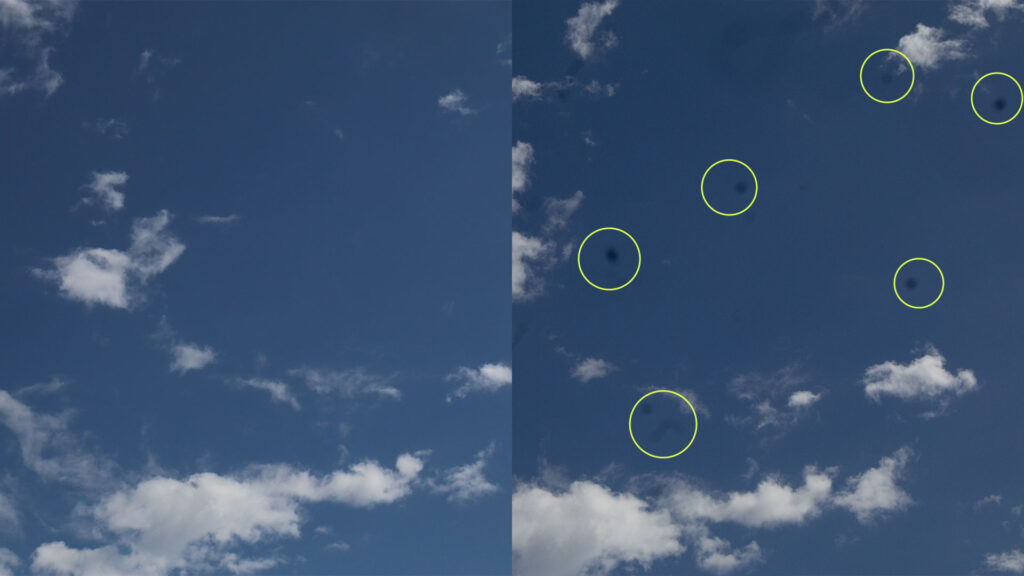
Dark grey specks, blobs, or little commas that were not in the sky are dust on your sensor.
The two things this test tells you
First: whether it is the sensor or the lens.
Shoot three or four frames with the lens pointed in different directions, or swap lenses and shoot again. Sensor dust is in the same position in every frame, because it is sitting on the sensor and the sensor does not move. If the spots shift around between frames, you are looking at something else — dirt on the front element, a smudge, or something that was actually in the sky.
Second: how bad it is.
Here is the part people find counterintuitive. Dust is far more visible at f/22 than at f/2.8. At a small aperture the light arrives in a narrow cone and each speck casts a hard-edged shadow. Wide open, the cone is broad and the same speck is smeared into nothing.
So the f/22 test is deliberately the worst case. If you can see a dozen spots at f/22, that does not mean your photographs are ruined — it means your photographs are fine until you stop down. Landscape shooters working at f/16 see every one of them. Somebody shooting portraits at f/2 may never see a single one.
The practical question is not “is there dust?” There is always dust. It is “does it show up at the apertures I actually use?” Shoot a test frame at your normal working aperture. If it is clean there, you can wait.
What your camera already does about it
Nearly every mirrorless and DSLR made in the last fifteen years shakes the sensor at startup or shutdown to vibrate loose particles off. It works, and it works on exactly one category of problem: loose, dry dust.
What it cannot do anything about is the sticky stuff — a speck of pollen, a fleck of oil thrown off the shutter mechanism, a bit of sea spray, anything that has been rained on. Those are bonded to the filter and vibration will not move them. If you have run the camera’s cleaning cycle three times and the same spot is still there in the same place, it is not dust, and it is not going to shake off.
Can you do it yourself?
Yes, with real caveats.
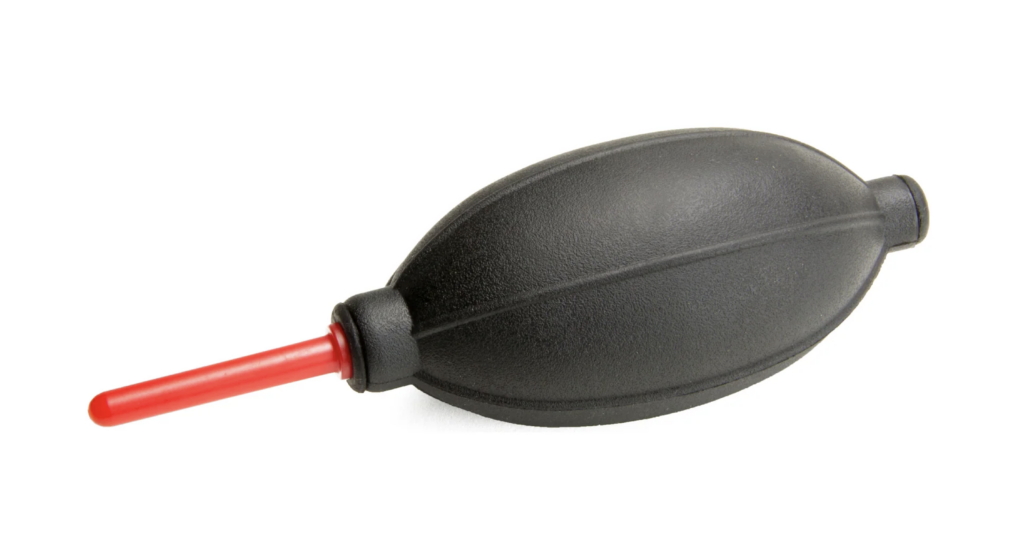
A blower is safe and worth owning. A manual rubber blower, used with the camera facing downward so gravity helps, will clear a lot of loose dust with no risk. Hold the lens mount down, lock the mirror up or put the camera in its sensor-cleaning mode, and give it a few puffs. Never use compressed air — the propellant can spray liquid onto the filter and turn a five-minute problem into a real one.
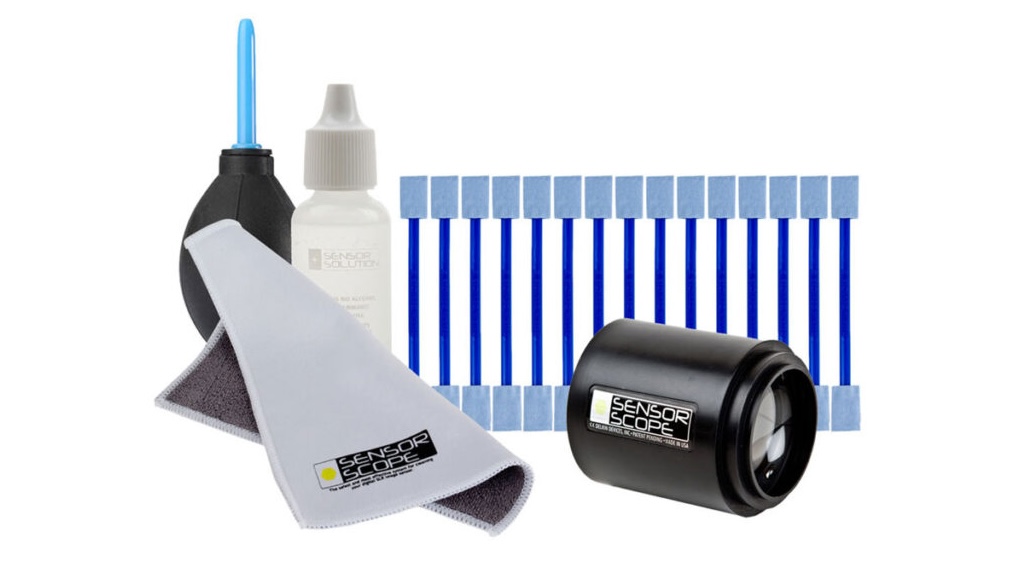
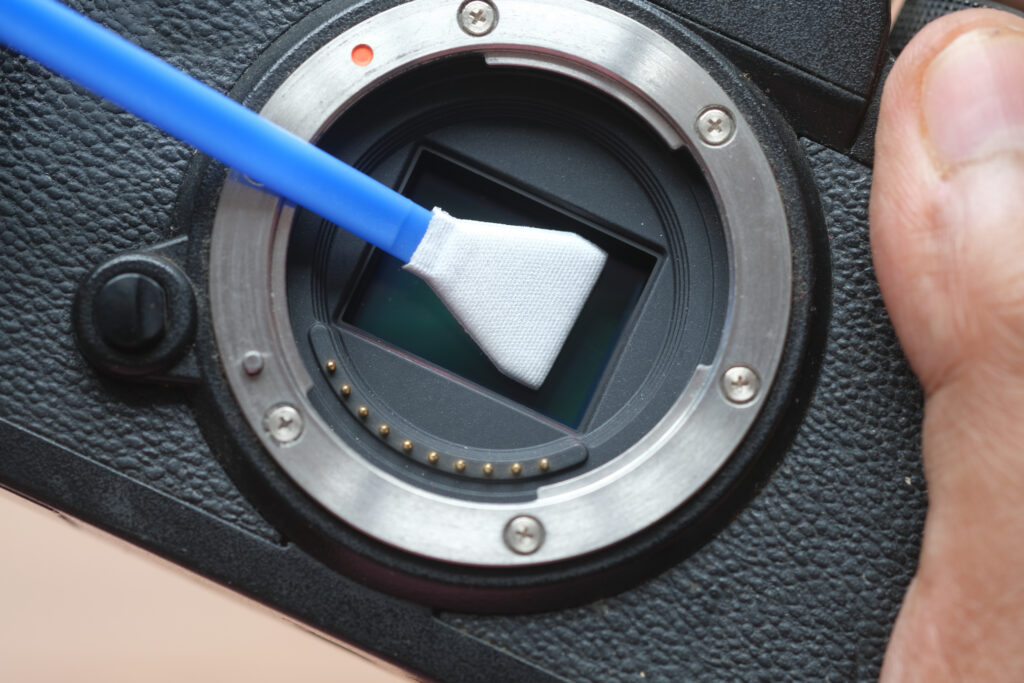
Wet swabs are where it gets serious. Sensor swabs and cleaning fluid are sold for exactly this and they work. They also involve dragging a physical object across the most expensive single component in your camera. Done correctly it is fine. Done with the wrong swab width, too much pressure, a reused swab, or a grain of grit picked up on the way in, you can leave a permanent mark.
Our honest position: if you are comfortable, careful, and willing to accept the downside, go ahead. If you are about to do it for the first time the night before something important, do not. That is the specific scenario that ends badly.
And if it is oil rather than dust, stop. Oil spots usually mean something mechanical is throwing it, and the cleaning is treating a symptom. That is worth having someone look at.
When to just bring it in
- The same spots survive three in-camera cleaning cycles
- The spots are smeared or streaked rather than round — that is not dry dust
- You can see them at the apertures you normally shoot
- There is something on the sensor you cannot identify
- You have an important shoot coming and you do not want to find out the hard way
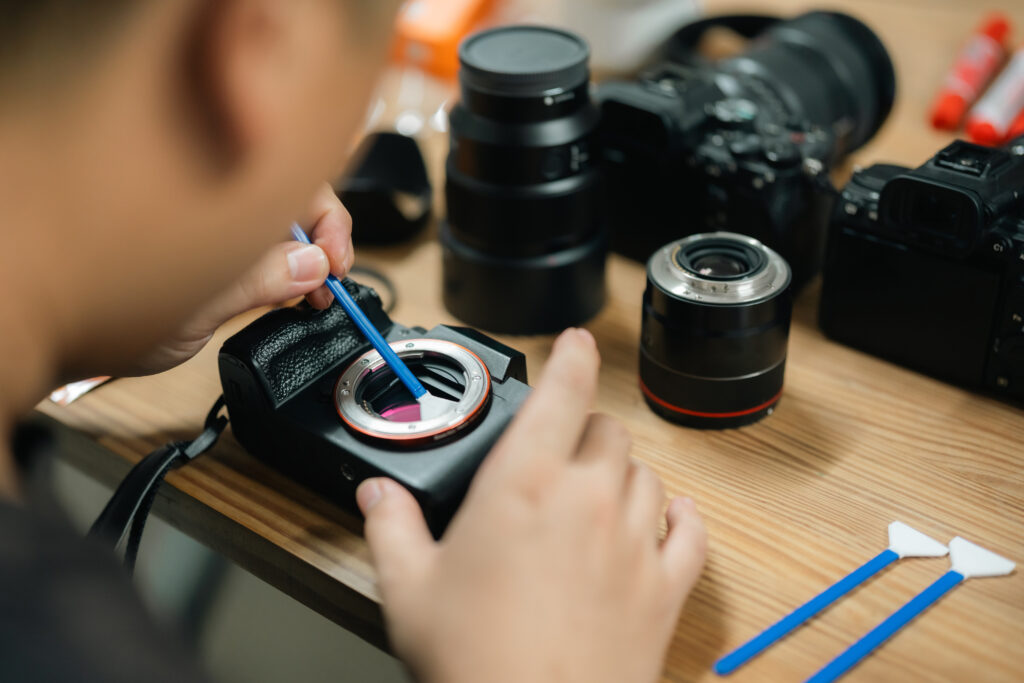
We clean sensors at both stores, and we will tell you honestly if it does not need it — which happens a fair amount. Plenty of people come in with a camera that tests clean at f/8 and leave having spent nothing.
Worth doing before a trip rather than after. We have cleaned a lot of cameras for people who got home, looked at two thousand frames from somewhere they will never go again, and found the same grey comma in all of them.
Come by
San Antonio: 6635 San Pedro Ave · 210-349-4400
Austin: 5907 Burnet Rd · 512-520-5161
Hours: Mon–Fri 10–7 · Sat–Sun 10–6
Cleaning, calibration and repair at both locations. Bring the camera and the lens you noticed it with.